
It’s the politics, stupid!
Pisani-Ferry, Jean. Four years after first cracks in the financial system emerged, the coincidence of the euro-area and the US debt crises is a powerful reminder of the complexity of the chain of events set in motion by the global financial crisis. Citizens who were told in 2009 that resolute joint action by the members […]
Stagnant and Paralyzed
Spence, Michael. The recent dramatic declines in equity markets worldwide are a response to the interaction of two factors: economic fundamentals and policy responses – or, rather, the lack of policy responses. First, the fundamentals. Economic growth rates in the United States and Europe are low – and well below even recent expectations. Slow growth […]
Italy: Call in the G20?
Dadush, Uri & Stancil, Bennet. Italy is the latest European country to be the cause of market angst. This column argues that if there is one good thing to come from the recent developments it is that rising Italian interest rates will mean the only options for Eurozone are the long-term solutions to the crisis: increasing […]
A Contagion of Bad Ideas
Stiglitz, Joseph. The Great Recession of 2008 has morphed into the North Atlantic Recession: it is mainly Europe and the United States, not the major emerging markets, that have become mired in slow growth and high unemployment. And it is Europe and America that are marching, alone and together, to the denouement of a grand […]
Beyond the Invisible Hand: Groundwork for a New Economics
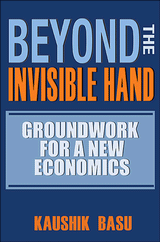
Basu, Kaushik. 2011. Beyond the Invisible Hand: Groundwork for a New Economics. Princeton and Oxford: Princeton University Press, σελ. viii + 258 + index. Ο Kaushik Basu υπηρετεί και εμπλουτίζει την παράδοση που, χρόνια τώρα, ανασχηματίζουν και θεωρητικώς ενισχύουν – και φορμαλιστικώς αναβαθμίζουν – πολλοί και πολύ ταλαντούχοι Ινδοί οικονομολόγοι, με προεξάρχοντα τον δάσκαλό του, […]
Only a more active ECB can solve the euro crisis
De Grauwe, Paul. This paper asserts that the contagion currently afflicting sovereign bond markets in the eurozone can only be stopped if there is a central bank willing to be lender of last resort, i.e. willing to guarantee that the cash will always be available to pay out the bondholders. Until recently, the European Central […]
The Root of All Sovereign-Debt Crises
Bhidé, Amar & Phelps, Edmund. The Greek debt crisis has prompted questions about whether the euro can survive without a nearly unimaginable centralization of fiscal policy. There is a simpler way. Irresponsible borrowing by governments in international credit markets requires irresponsible lending. Bank regulators should just say no to such lending by institutions that are already under […]
Debt burden in advanced economies now a global threat
Prasad, Eswar & Ding, Mengjie. Our analysis paints a sobering picture of worsening public debt dynamics and a sharply rising debt burden in advanced economies. These rising debt levels combined with heightened concerns about fiscal solvency now constitute a major threat to global financial stability. Recent events in Greece, Ireland, Portugal and other economies on […]
The Second Great Contraction
Rogoff, Kenneth. Why is everyone still referring to the recent financial crisis as the “Great Recession”? The term, after all, is predicated on a dangerous misdiagnosis of the problems that confront the United States and other countries, leading to bad forecasts and bad policy. The phrase “Great Recession” creates the impression that the economy is […]
Happiness economics: Can we have an economy of wellbeing?
Graham, Carol. The UK government is the latest to consider incorporating measures of happiness in its policymaking. This column takes stock of what we know from investigations into people’s wellbeing. It concludes that there is still much to resolve before a measure of gross national happiness is possible – or indeed desirable. At this year’s […]