
Οικονομική Πολιτική Σταθεροποίησης και Αστάθεια στην ΟΝΕ
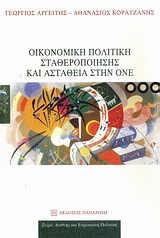
Αργείτης, Γιώργος και Κορατζάνης, Αθανάσιος. 2011. Οικονομική Πολιτική Σταθεροποίησης και Αστάθεια στην ΟΝΕ. Αθήνα: Παπαζήσης, σελ. 212. Η βασική άποψη που διατυπώνεται στο βιβλίο είναι ότι το θεσμικό καθεστώς της μακροοικονομικής σταθεροποίησης στην ευρωζώνη, δηλαδή η ΟΝΕ, συνεπάγεται ελλειμματική σταθεροποίηση, διεύρυνση της ασυμμετρίας και καθυστέρηση της μεγέθυνσης στις οικονομίες της ευρωζώνης και, βεβαίως, έχει συμβάλλει […]
Japan’s earthquake and tsunami: International trade and global supply chain impacts
Escaith, Hubert, Keck, Alexander, Nee, Coleman & Teh, Robert. The consequences of the tragic disaster in Japan are many. This column examines the trade effects. It suggests that Japanese exports will fall by 0.5–1.6% and its imports will rise by 0.4–1.3%. Despite the devastation in Japan, the effects on global trade will be relatively small. The […]
How Asia Copes with America’s Zombie Consumers
Roach, Stephen. Asia needs a new consumer. A post-crisis generation of “zombie consumers” in the United States is likely to hobble growth in global consumption for years to come. And that means that export-led developing Asia now has no choice but to turn inward and rely on its own 3.5 billion consumers. Of course, this […]
Μια περίεργη απεργία

Η πρώτη απεργία πραγματοποιήθηκε το 1152 π.Χ. στην αρχαία Αίγυπτο, από τους τεχνίτες της Βασιλικής Νεκρόπολης. Η απεργιακή αυτή κινητοποίηση ήταν επιτυχής, καθώς οι αιγυπτιακές αρχές αύξησαν τους μισθούς των τεχνιτών. Η πρώτη χώρα που αναγνώρισε συνταγματικά το δικαίωμα της απεργίας ήταν το Μεξικό (1917), ενώ το 1937, στις ΗΠΑ, πραγματοποιήθηκαν 4.740 απεργίες που ήταν […]
Τέχνες, χρήμα, καινοτομία

Το κέρδος αποτελεί κίνητρο δημιουργίας για πολλούς καλλιτέχνες, ακόμα και για τους συνθέτες κλασικής μουσικής. Από την αλληλογραφία των Bach, Mozart, Haydn, και Beethoven προκύπτει ότι ήταν παθιασμένοι με το χρήμα! Ο Mozart, λόγου χάρη, ανέφερε σε ένα γράμμα του : «πίστεψέ με, ο μοναδικός μου σκοπός είναι να κάνω όσο το δυνατόν περισσότερα χρήματα· […]
Democracy or Finance?
Skidelsky, Robert. “Shorting” is a tactic well known among the financial cognoscenti. It means betting against an asset with borrowed money in the expectation of making a profit when its value goes down. A speculator can “short” a government by borrowing its debt at its current price, in the hope of selling it later at […]
To make the IMF relevant will take more than a new leader
Ghosh, Jayati. The IMF has consistently failed to do its job. Whether or not Gordon Brown takes over, it needs major reform. In appearing to veto Gordon Brown’s chances of becoming the next head of the International Monetary Fund, David Cameron says the organisation needs someone who “understands the dangers of excessive debt, excessive deficit”. […]
Damming Capital
Ocampo, Jose Antonio, Gallagher Kevin, & Griffith-Jones, Stephany. Capital-account regulations have been at the center of global financial debates for two years. The reasons are clear: since the world has experienced a “multi-speed recovery,” as the International Monetary Fund puts it, slow-growth advanced countries are maintaining very low interest rates and other expansionary monetary policies, while fast-growth […]
The politics of moral hazard
In essence the True Finns, real winners of Finland’s general election on Sunday, are perhaps best seen as a political expression of that economic mantra of the moment, “moral hazard”. A right-wing populist movement, the party has successfully tapped disquiet over the country’s stalling economy and the idea that the profligate EU, overfunded by Finns, is […]
How Risky is the Global Economy?
El-Erian, A. Mohamed. Three years after the global financial crisis, the global economy remains a confusing place – and for good reasons. Should we draw comfort from gradual healing in advanced countries and solid growth in emerging economies? Or should we seek refuge against high oil prices, geopolitical shocks in the Middle East, and continued nuclear […]